How it works
How Brainstormer turns one question into a decision
An idea program has five moving parts. Brainstormer runs all of them in one place and uses AI where the work is slow and repetitive.
01
Set the yardstick
Describe the company and write down up to six strategic goals. Every idea is later measured against them, so the ranking reflects your priorities, not the loudest voice.
02
Open a challenge
Ask the team one sharp question, set a deadline and invite people by email. AI adds starter ideas so nobody faces an empty page.
03
Collect and clean up
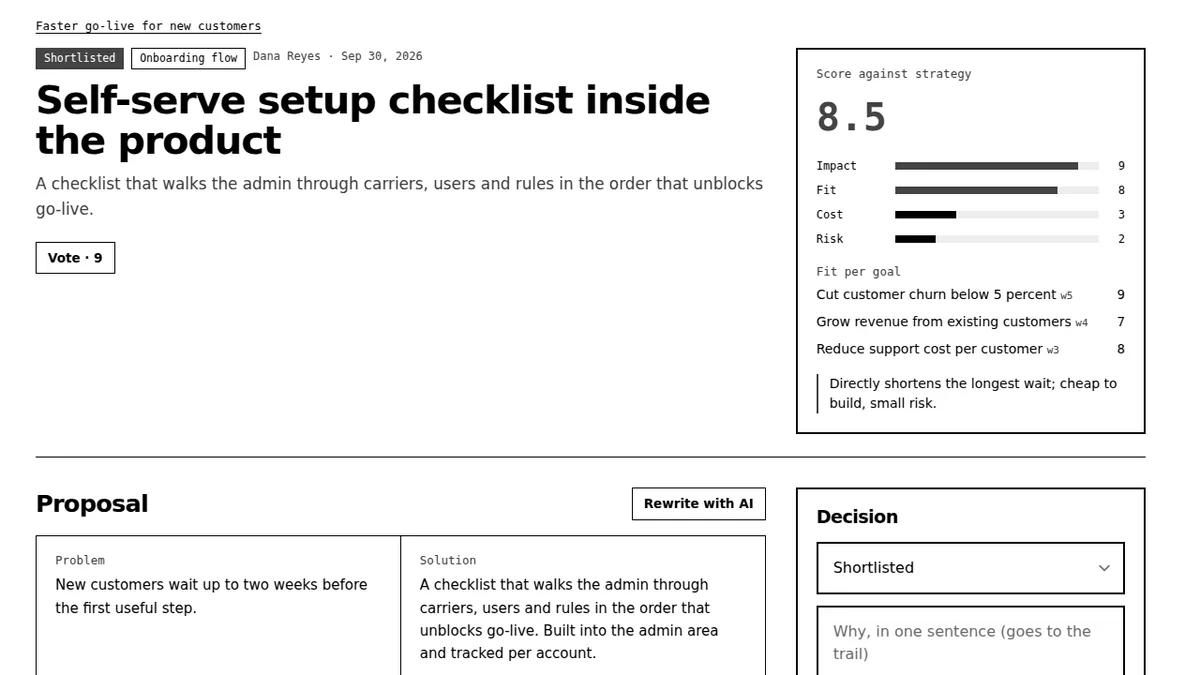
People submit in two lines. AI turns each submission into a short proposal, flags duplicates for merging and groups everything into themes.
Problem
New customers wait two weeks for a data import slot.
Solution
Self-serve import templates for the most common source systems.
First step
Build the template for the most requested system in two weeks.
Success measure
Median time to first import under 3 days.
04
Score against strategy
Every idea gets impact, cost, risk and fit with each goal, a weighted total and a one sentence rationale you can challenge.
7.9
05
Decide and follow through
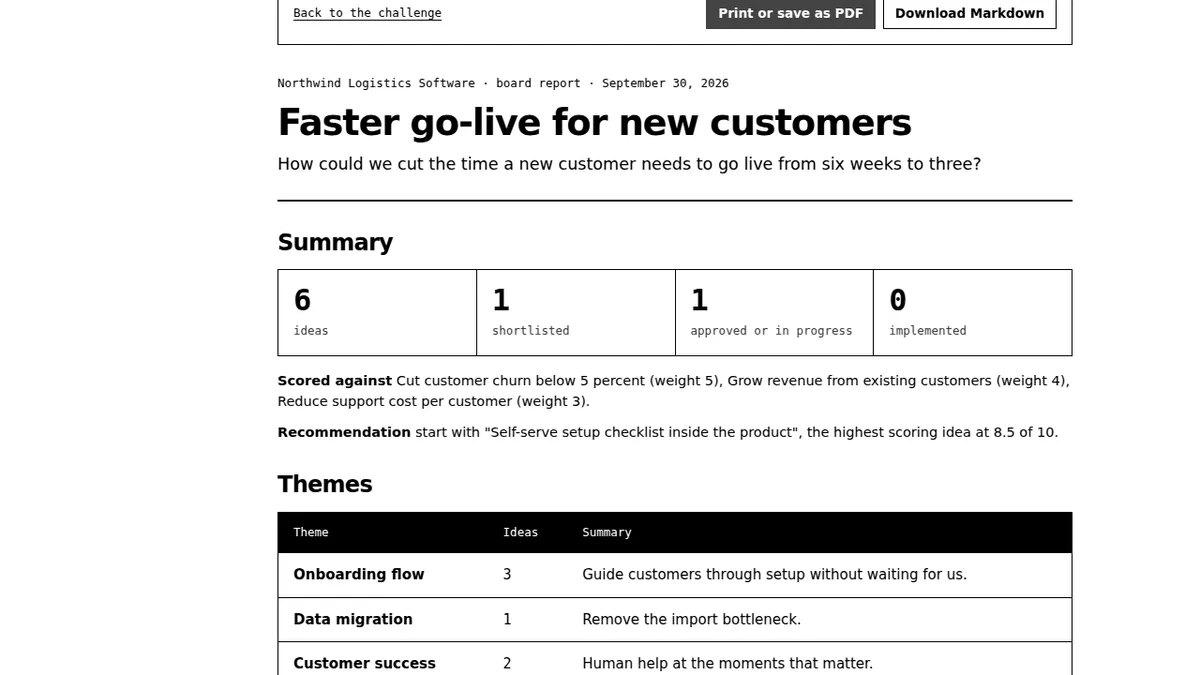
Move ideas from review to shortlist, approval, delivery and done. Every move is logged with who, when and why, and the board report is one click away.
How the score is calculated
The AI rates each idea from 1 to 10 on impact, cost, risk and fit with every strategic goal, and writes one sentence on the main strength and weakness. The total is arithmetic you can check, not a number the AI invents.
fit = weighted mean of the fit with each goal
total = 0.35 x impact
+ 0.30 x fit
+ 0.20 x (11 minus cost)
+ 0.15 x (11 minus risk)
Goal weights 1 to 5 on Business and Enterprise, equal weights on Team.
The AI strategy workshop
For questions that need a structured debate before they go to the whole company, six standing perspectives attack one question: the Optimist, the Skeptic, the Customer, the Engineer, the Marketer and the Visionary. Each answers from its own angle, then the strongest options are shortlisted with the reasoning written out.
Roles and privacy
The owner pays and manages the plan, admins run the program, members submit and vote. Your challenges and ideas are visible only inside your workspace and are never used to train AI models. Export or delete your data from the account page.